Why quitting porn is this hard (and why it isn't weakness)
First, drop the idea that you're failing because you're weak. You're failing because you're fighting something engineered to be hard to quit, with the wrong tool.
Here's the mechanism, plainly. Porn offers something no natural reward can match: intense stimulation, on demand, with unlimited novelty, in complete privacy, for free. Your brain's reward system did not evolve for that. Every session teaches it a lesson - "when you feel stressed, bored, lonely or tired, this is the fastest relief available." Repeat that a few hundred times and it stops being a decision. It becomes a reflex, wired to fire the instant certain triggers appear.
That's the trap most people never see: by the time you're "deciding" whether to give in, the reflex has usually already started. You're not losing a fair fight against temptation. You're arriving late to one that was mostly decided by your environment and your triggers. Which is also the good news, because those are things you can change.
The one truth this whole plan is built on
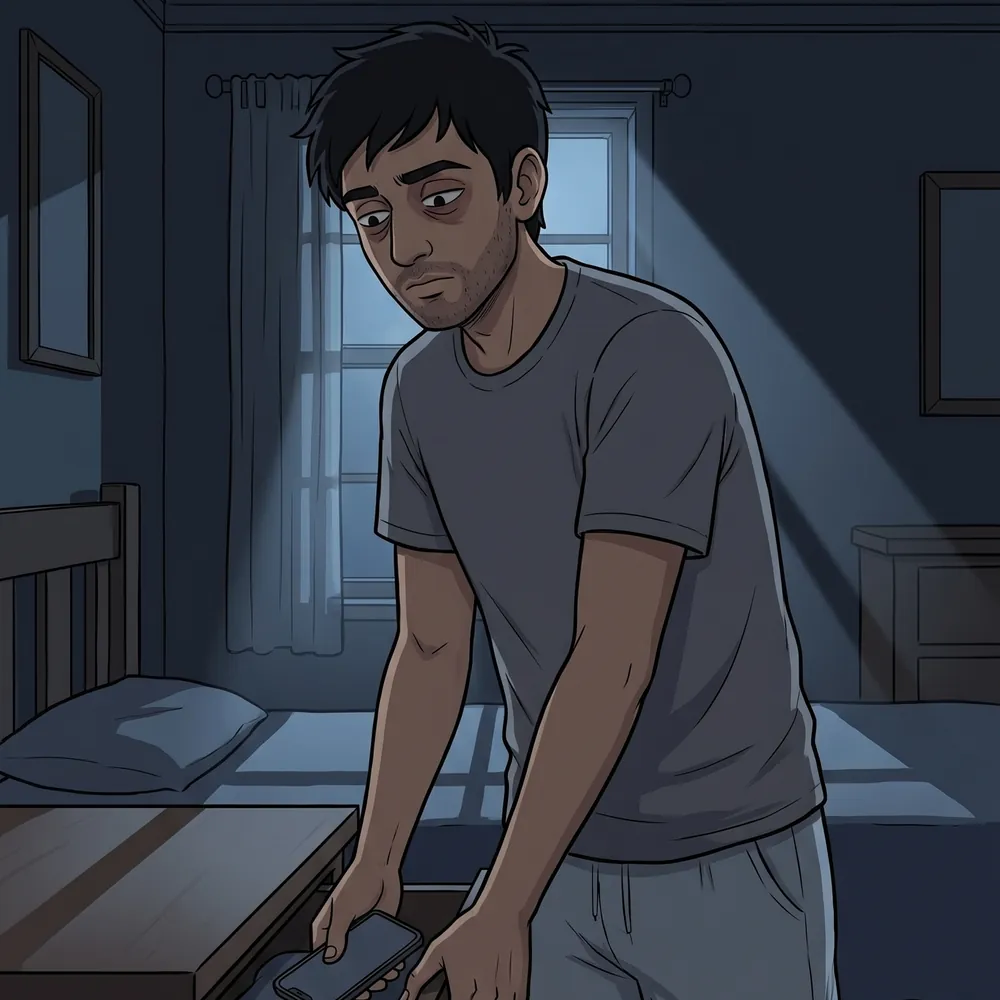
You cannot rely on willpower at the moment of temptation, because that's the exact moment you have the least of it. So the entire strategy is to move the fight earlier - to make the decision when you're calm and clear, and to build an environment that carries that decision for you when you're not. Win the day at 9am, not at 11pm.
Every step below is an application of that single idea. If you remember nothing else, remember this: stop trying to be strong in the weak moment. Arrange your life so the weak moment barely happens, and so it can't do much damage when it does.
Step 1: Design your environment so the fight rarely starts
This is the highest-leverage step by a wide margin, and it's the one people skip because it feels like cheating. It isn't cheating. It's the whole game.
The goal is simple: make explicit content hard to reach and easy to avoid, on every device, without depending on you to be disciplined in the moment.
- Put up a real barrier on your phone. Your phone is where almost all of it happens, usually late, usually alone. A content blocker that closes explicit material the second it appears - before you engage with it - removes the exact two-minute window where relapses begin. This is precisely why we built Qlean: it stands guard across every app, so a late-night slip can't turn into a session. Set it up once and it protects the moments you can't.
- Remove the easy paths. Clear history and saved content, sign out of the accounts you drift to, and take the friction seriously - even small obstacles interrupt an automatic reflex long enough for the thinking brain to catch up.
- Change your night. A huge share of relapses happen in bed, in the dark, with the phone. Charge the phone outside the bedroom, or across the room. This one change alone breaks more relapse chains than any amount of resolve.
If you share a room, live in a hostel, or are in a joint family, some of this is harder to arrange and the honest conversations are harder to have. Our guide to quitting when you have no privacy adapts the same plan for a space you do not control.
Make the weak moment lose its power
Qlean closes explicit content the moment it appears on your phone - across every app, automatically. It's the barrier that does the guarding when your willpower is at its lowest, which is exactly when you need it.
Get Qlean on Google PlayStep 2: Have an urge protocol you decided in advance
Urges will still come, especially early. The mistake is trying to figure out what to do while one is happening, because that's when you're least able to think. So decide now, in the calm, exactly what you'll do the moment an urge hits. Write it down. Make it automatic.
A protocol that works for a lot of people:
- Name it. Say to yourself, out loud if you can, "this is an urge, it's a wave, it peaks and it passes." Naming it puts a sliver of space between you and the reflex. Urges feel permanent and they are not - most crest and fade within a few minutes if you don't feed them.
- Move your body. Stand up. Leave the room. Do twenty pushups, splash cold water on your face, step outside. You're interrupting a physical pattern with a physical action, and you're bleeding off the charge.
- Change your input. An urge needs your attention to grow. Text a friend, call someone, put on a podcast, get into a task that needs your hands. Deny it the fuel.
- Delay, don't negotiate. Don't argue about "never again." Just tell yourself "not now, wait ten minutes." Ten minutes later the wave is almost always smaller. Delay beats willpower because it doesn't require you to win, only to wait.
If you want the full technique behind that first bullet, we cover it in detail in our guide to urge surfing - it's the single most useful skill for the exact moment an urge hits.
Step 3: Replace the habit, don't just delete it
A habit is an answer to a question. Yours has been answering something for years - "how do I deal with stress, boredom, loneliness, the empty hour before sleep?" If you delete the answer without offering a new one, the question keeps asking, and eventually the old answer comes back.
So figure out what your porn use was actually for. Be honest. Was it stress relief? Escape from boredom? A way to feel something at the end of a numb day? A hedge against loneliness? Then choose a healthier answer to that specific need and practise it deliberately - training when you're stressed, calling a friend when you're lonely, a real wind-down routine for the empty hour. You're not just resisting the old habit. You're making it unnecessary.
Step 4: Track your streak (for the right reason)
Counting your clean days works, but not for the reason people think. It's not about the number. It's that a visible streak turns an abstract goal into something concrete you can feel yourself protecting. Each day you add raises the cost of throwing it away, and that loss-aversion is a genuine, useful force.
Two rules for using a streak well. First, let it motivate you without letting it define you - your worth is not the counter. Second, and this is the one that saves people: never let a reset convince you it's all gone. The strength you built over thirty days doesn't vanish because the number did. Which brings us to the most important step of all.
Step 5: Recover from a relapse without spiralling
You might slip. Most people do at least once. What happens in the next hour matters more than the slip itself, because the real damage almost never comes from a single relapse. It comes from the spiral afterward - the "I've already ruined it, so what's the point" that turns one bad night into a lost month.
Refuse the spiral. Here's how:
- Treat it as one data point. A single lapse is information, not a verdict. It doesn't erase your progress and it doesn't mean you're back to zero as a person, even if a counter says so.
- Do the honest autopsy. What was the trigger? What time, what mood, what situation, what let the reflex through? Every relapse tells you exactly where your defence has a gap. Close that specific gap - a blocker you'd disabled, a phone in the bedroom, an unstructured evening - and you're stronger than before it happened.
- Restart the same day. Not Monday, not next month. Today. The gap between falling and getting back up is the whole thing. Make it minutes, not weeks.
The people who quit for good are not the ones who never fall. They're the ones who got very good at standing back up quickly and quietly, without the drama that makes one fall into ten.
What to expect on the way
The first two to three weeks are the hardest - your brain is recalibrating and the urges are loudest. Push through and it eases. Somewhere around a month the head clears and the pull weakens. By 60 to 90 days of consistency, staying clean stops feeling like a daily battle and starts feeling like just who you are now. We mapped this out in detail in our honest NoFap benefits timeline if you want to know what each stage tends to feel like.
If porn use is tangled up with deeper depression, anxiety, trauma or genuine compulsion that this can't touch, please treat that seriously and consider talking to a doctor or therapist. There's no shame in it, and some fights are meant to be fought with help.
But for most people, most of the time, quitting comes down to what's in this guide: stop relying on willpower you won't have, build an environment that guards you, decide your responses in advance, replace the habit with something real, and get back up fast when you fall. Start today. Protect tonight. Let the weeks do the rest.
Two things worth adding to your plan: a real accountability partner makes every part of this easier to sustain, and a healthy daily routine removes most of the empty hours where relapses actually happen.
And plan for the situations that break routines entirely - hotel rooms, empty houses, long stretches alone are where most streaks actually end. Our guide on staying clean while travelling or alone covers preparing for those in advance. If you are reading this on day one, our first 24 hours guide turns everything above into an hour-by-hour plan. If you are still deciding whether this actually applies to you, signs of porn addiction is a more honest starting point than guessing. This guide is built around a complete, immediate stop rather than a gradual taper; cold turkey vs gradual covers why, and when the alternative genuinely makes more sense. For quick, direct answers to the most common questions in one place, see our full NoFap FAQ.