The same machinery, a different screen
Modern games, especially free-to-play mobile and live-service titles, are built by teams whose job is engagement, and the techniques they use are the same ones behind compulsive porn use and endless scrolling: variable rewards that pay out unpredictably, daily login streaks that punish missing a day, loot mechanics that mimic gambling, and matchmaking designed to always offer one more round.
This is not a coincidence and not an exaggeration. It is publicly documented industry practice, and it produces the same behavioural signature: playing past the point of enjoyment, difficulty stopping even when you want to, and a nagging pull back to the game during unrelated moments of your day.
Why this matters specifically for quitting
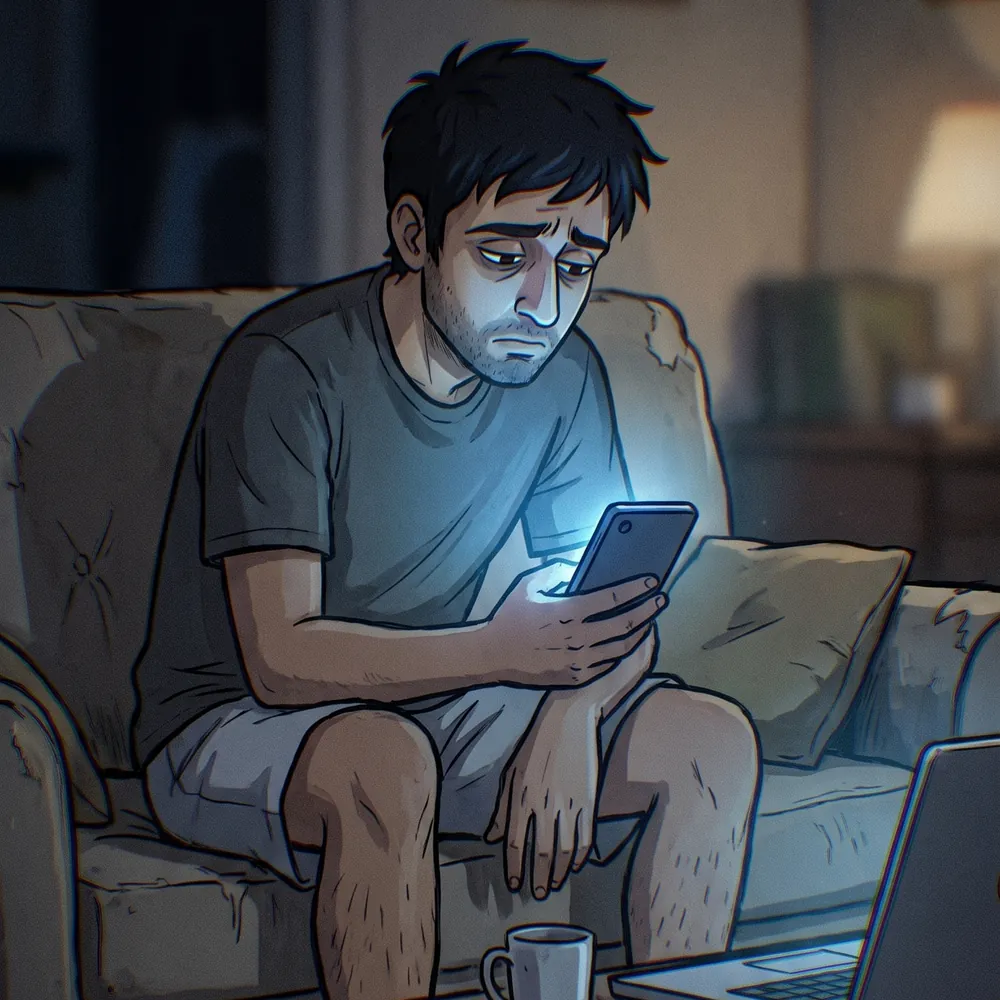
A common pattern among people early in a streak: the urge to watch porn fades, and a compulsive relationship with a game grows in its place, often without anyone noticing the swap. The specific content changed. The underlying practice of reaching for an engineered dopamine hit whenever life gets boring, stressful or quiet did not.
This matters because the actual goal was never just "stop watching porn." It was building the capacity to sit with boredom, stress and restlessness without immediately reaching for an engineered escape. A habit that quietly relocates to a different app has not been beaten, it has changed address.
The honest question to ask: not "is this game bad," but "am I playing because I chose to, or because the game is pulling me back the way the old habit used to." The second one is worth taking seriously, whatever the app.
To be clear about what this is not saying
This is not an argument that gaming is inherently harmful, or that it deserves the same moral weight as explicit content. Plenty of people play games in a genuinely healthy, bounded way, as a real hobby with real limits. The point is narrower and more useful: if you notice the exact compulsive pattern you were fighting reappearing in a new form, it deserves the same seriousness, regardless of what the screen is showing.
Close the door the old habit used
Whatever else changes, keep the original trigger closed. Qlean closes explicit content the moment it appears on your phone, across every app, so at minimum that door stays shut while you work on the rest.
Get Qlean on Google PlaySigns the pattern has relocated
- You keep playing past the point of enjoyment. The session continues out of momentum or a fear of missing a reward, not because you are actually having fun.
- You reach for it in the exact moments the old habit used to fill. Boredom, stress, loneliness, a spare five minutes. If the trigger is identical, the function probably is too.
- Stopping causes real irritation or restlessness. A healthy hobby does not usually produce withdrawal-like agitation when you put it down.
- You are tracking a streak or event more than you are tracking your own enjoyment. Engineered urgency, daily logins, limited-time events, is doing more work than genuine interest.
Handling it without overcorrecting
You do not necessarily need to quit gaming entirely, and treating every hobby as a threat is its own kind of exhausting overcorrection. What helps most is the same structural approach that works elsewhere in this practice.
- Put a real boundary on it. A time limit decided in advance, before you start, not negotiated with yourself mid-session.
- Prefer games with a natural stopping point. Titles built around session length and mastery tend to be healthier than live-service games engineered around daily obligation and endless matchmaking.
- Notice which specific game does this to you. It is rarely all gaming, usually one or two specific titles with the most aggressive reward engineering. Naming the specific one is more useful than a blanket rule.
- Keep building the actual skill. Sitting with boredom without reaching for anything at all, occasionally, on purpose, is what actually strengthens the capacity this whole practice depends on. Our piece on social media's reward loop covers the same discipline applied to feeds.
The actual point of this practice
Quitting porn was never really about porn specifically. It was about refusing to let an engineered loop run your attention and your evenings. That same discipline applies to whatever else is engineered the same way, and noticing it honestly, rather than only where it is comfortable to notice, is what makes the whole practice hold together. This is the same underlying point made in how habits actually form: the mechanics matter more than the specific content running through them.