How this differs from ordinary stress
Stress usually has an identifiable source, a deadline, a conflict, a specific pressure. Anxiety is often quieter and less anchored, a persistent, low-level unease that doesn't always point clearly at a cause. That vagueness makes it harder to address directly, and it's exactly what makes an escape, any escape, feel appealing even when nothing acute is actually happening.
For people with an anxiety disorder specifically, this can be close to a constant background condition, not an occasional spike. The urge to reach for something fast and numbing shows up far more often as a result, not because desire is elevated, but because the discomfort needing relief is almost always present.
Why the habit specifically answers this
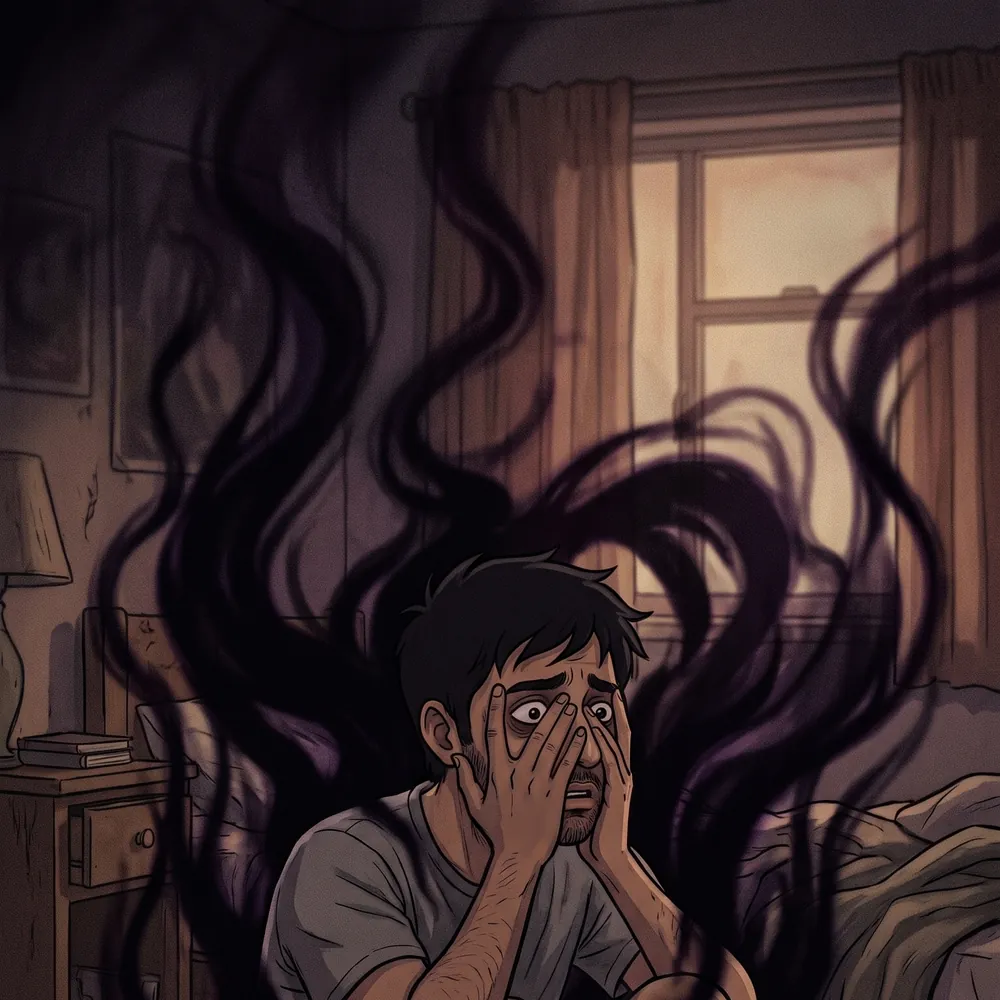
Anxious attention tends to spiral, circling the same worry repeatedly without resolution. The habit interrupts that spiral completely and immediately, replacing anxious, circling thought with total absorption in something else for a few minutes. That's a real, if brief and costly, form of relief, which is exactly why it's so hard to resist for someone whose baseline experience is a persistent, unpleasant hum that rarely lets up.
Worth noticing: if urges show up regardless of what's actually happening around you, on good days as much as bad ones, and follow no obvious external pattern, anxiety operating in the background is a more likely explanation than any specific trigger. Look for the a general hum rather than a single spike.
What actually helps
- Address the anxiety directly, not only the urge it produces. Breathing techniques, grounding exercises, and in more persistent cases real professional support all treat the actual source rather than just the symptom that shows up downstream from it.
- Build a physical outlet for the excess activation. Anxiety and restlessness share a lot of the same physiological signature, and exercise as an outlet covers channeling that energy productively rather than letting it circle with nowhere to go.
- Try a short daily practice that trains the spiral to settle. Meditation is well studied for anxiety specifically, not only for general urge management. Our guide on meditation for urges covers a simple, sustainable version worth starting with.
- Notice the specific moments the hum gets loudest. A short log, the same approach covered in journaling your relapse pattern, often reveals a pattern even when anxiety feels formless and hard to pin down from the inside.
Remove the fastest exit
Anxiety looks for the fastest available escape, and this one shouldn't be it. Qlean closes explicit content the moment it appears on your phone, across every app, so it can't be the automatic answer anymore.
Get Qlean on Google PlayThe cycle worth watching for
A specific loop shows up often here worth naming directly: anxiety drives the habit, the habit produces guilt afterward, and that guilt becomes a fresh source of anxiety, which then drives the habit again. Breaking this requires treating the anxiety honestly as its own real problem, rather than only ever treating the downstream behaviour it produces. Fixing the symptom while ignoring the actual source tends to leave the source free to find a new symptom eventually.
When to get real support
If anxiety is severe, constant, or interfering meaningfully with daily life, a blocker and a good routine are genuinely not the right tool for that job. A therapist trained in anxiety specifically, and where appropriate a doctor, can help in ways that self-directed effort alone typically can't reach. Taking that step is not a departure from this practice. If anything it's the most serious version of taking the whole of yourself seriously, which has always been what this practice was actually about underneath everything else.